
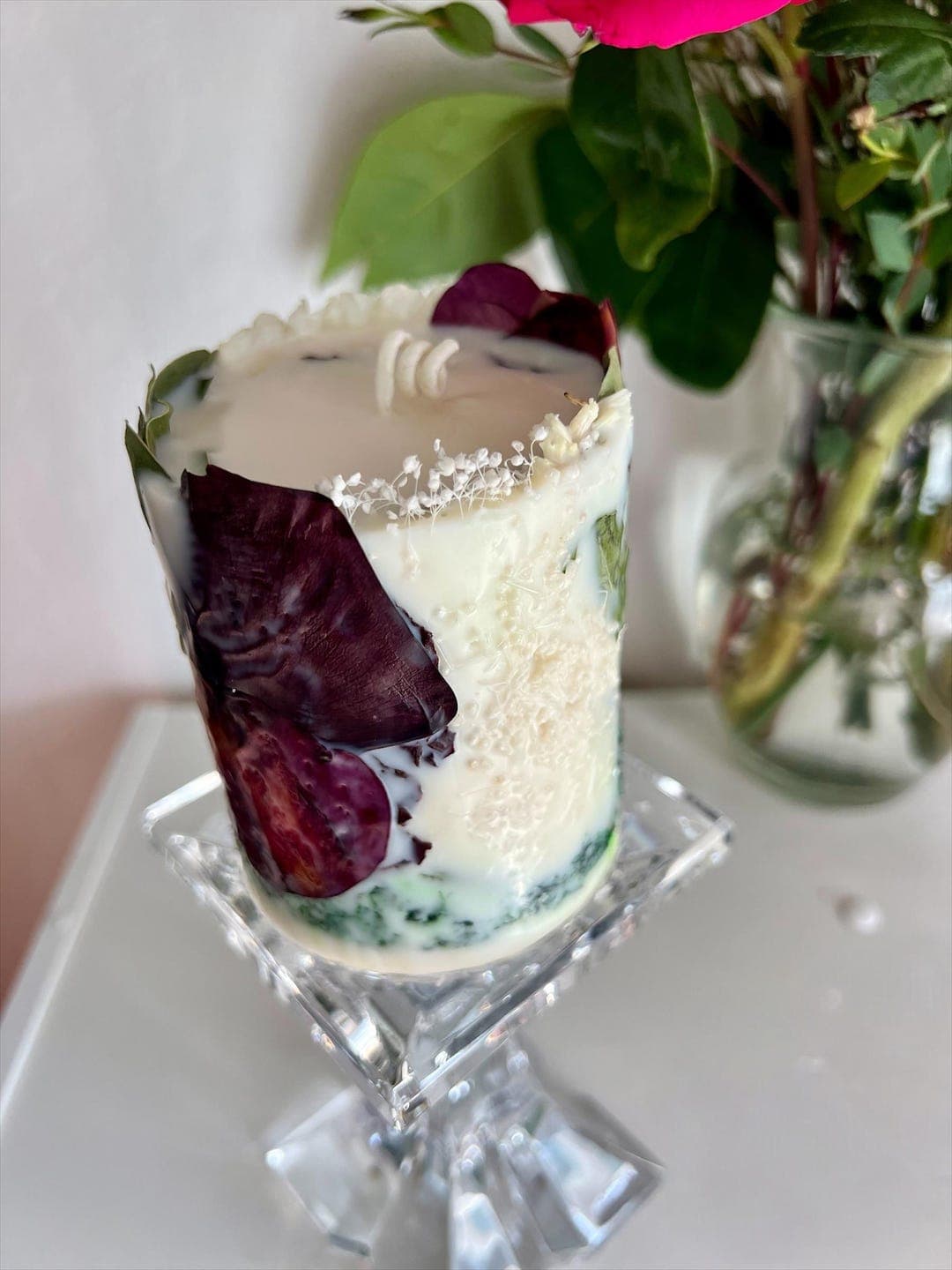
Smell is the only sense that runs straight to the limbic system — the part of the brain that handles emotion and memory. That's why a scent can calm you down before you've even noticed you're calmer. It's also why we choose our botanicals the way herbalists do: for what they've been used for, and for what modern research has found since.
A candle is not a medicine, and we'd never claim one cures anything. But the plants inside it have real, documented properties — and we think you deserve to know them.
Lavender is the most researched aromatic plant in the world. Its key compound, linalool, has been studied in clinical settings for its calming effect on the nervous system — research links lavender aroma to reduced anxiety and improved sleep quality, which is why it shows up everywhere from hospital aromatherapy programs to traditional sleep remedies going back centuries.
It's also why real lavender sprigs make their way into our pressed botanicals, not just our scent blends.
Eucalyptus leaf contains 1,8-cineole (eucalyptol), a compound with a long medicinal history — it's the active note in countless chest rubs and steam inhalations, studied for supporting clear, comfortable breathing and a feeling of mental alertness. In herbal practice it's the classic "clear the air" plant.
You'll find it in Scarlet Bloom, where fresh eucalyptus lifts deep red rose over a warm cedar base.
Rose isn't just romantic shorthand. Rose aroma has been examined in aromatherapy trials for its effect on stress and low mood, with studies suggesting it can ease tension and promote a sense of well-being. Traditional Persian and Ayurvedic medicine reached for rose long before the studies did.
Cedarwood's warm, woody scent comes partly from cedrol, a compound studied for its mild sedative-leaning, grounding effects. It's the base note that makes a blend feel like an exhale — the reason woodsy candles read as "cozy" rather than just "woodsy."
Bright citrus oils are rich in limonene, studied for mood-elevating and alertness-supporting effects. Citrus is the ingredient we reach for when a blend needs to feel like morning light instead of evening embers — it's what makes Meadowlight smell like open windows.
Anyone can make a candle that smells nice. We'd rather make one whose ingredients have centuries of herbal practice — and a growing body of research — behind them. When you light one, you're participating in something much older than the candle itself.
Not sure which botanical fits your mood? The scent quiz matches you to a blend in five quick questions.